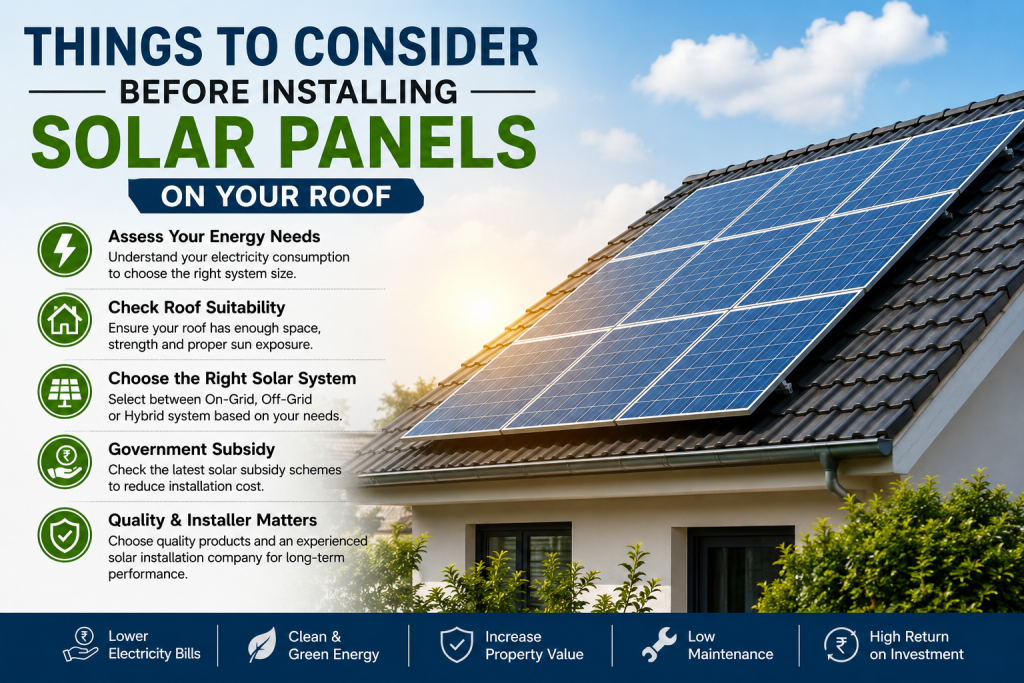
With rising electricity bills and increasing awareness about renewable energy, more homeowners and businesses are switching to solar energy solutions. Installing rooftop solar panels is one of the smartest long-term investments for reducing electricity costs and promoting sustainable living. However, before installing a solar system, there are several important factors you should consider to ensure maximum efficiency and return on investment.
If you are planning to install a solar panel system in India, especially for residential or commercial properties, this guide will help you make the right decision.
1. Understand Your Electricity Consumption
Before choosing a solar system, analyze your monthly electricity usage. Your electricity bill helps determine the size and capacity of the solar system required for your property.
For example:
- Small homes may require a 1kW–3kW system
- Medium-sized homes may need 3kW–5kW
- Commercial buildings may require larger solar installations
Knowing your energy requirements helps avoid overspending or underpowering your property.
2. Check Roof Space & Condition
Your rooftop should have enough open space for solar panel installation. A strong and shadow-free roof allows better sunlight exposure and higher solar power generation.
Things to inspect:
- Roof strength and durability
- Direction of sunlight exposure
- Shade from nearby buildings or trees
- Available installation area
South-facing roofs usually perform best for rooftop solar systems in India.
3. Choose the Right Type of Solar System
There are mainly three types of solar systems available:
On-Grid Solar System
Connected to the electricity grid and ideal for reducing electricity bills.
Off-Grid Solar System
Works independently with battery backup and is suitable for areas with frequent power cuts.
Hybrid Solar System
Combines both grid connection and battery storage for uninterrupted power supply.
Choosing the right solar solution depends on your electricity needs, budget, and location.
4. Quality of Solar Panels Matters
Not all solar panels offer the same performance. High-quality solar panels provide:
- Better efficiency
- Longer lifespan
- Improved energy generation
- Lower maintenance costs
Always select trusted solar brands and certified solar installation companies for better long-term results.
5. Check Government Solar Subsidy
The Indian government provides solar subsidies for residential rooftop solar installation under various renewable energy programs.
Benefits of solar subsidy:
- Reduces installation cost
- Encourages clean energy adoption
- Improves return on investment
Before installation, check the latest solar subsidy schemes available in your state.
6. Understand Installation Cost & ROI
Solar panel installation is a long-term investment. While the initial setup cost may seem high, it helps save significant money on electricity bills over time.
Factors affecting solar installation cost:
- Solar system size
- Type of panels
- Battery backup
- Installation complexity
- Location
Most rooftop solar systems recover their investment within a few years through electricity savings.
7. Hire a Professional Solar Installation Company
Choosing an experienced solar company is one of the most important decisions. Professional installers ensure:
- Proper site inspection
- Safe installation
- Quality materials
- Warranty support
- Efficient solar performance
A reliable solar company also helps with subsidy documentation and maintenance support.
8. Maintenance Requirements
Solar panels generally require low maintenance, but regular cleaning and inspection improve performance.
Basic maintenance includes:
- Cleaning dust and debris
- Checking wiring connections
- Monitoring inverter performance
- Annual system inspection
Well-maintained solar panels can last 20–25 years efficiently.
9. Consider Weather Conditions in Your Area
Local climate affects solar panel performance. Areas with good sunlight throughout the year generate more solar energy.
If you live in regions with:
- High temperatures
- Heavy rainfall
- Dust storms
- Frequent power cuts
You should choose a solar system designed for local environmental conditions.
10. Future Energy Needs
Think long-term before selecting your solar system size. Future electricity needs may increase due to:
- Electric vehicles
- Air conditioners
- Business expansion
- Additional appliances
Installing a scalable solar system helps accommodate future energy demands.
Why Rooftop Solar is a Smart Investment
Installing rooftop solar panels offers several long-term benefits:
- Lower electricity bills
- Reduced carbon footprint
- Energy independence
- Increased property value
- Low maintenance costs
- Government subsidy benefits
Solar energy is becoming one of the most reliable and affordable power solutions for homes and businesses across India.
Final Thoughts
Before installing solar panels on your roof, proper planning and expert guidance are essential. From understanding electricity consumption to selecting the right solar system and installation company, every step plays a crucial role in the efficiency and durability of your solar investment.
If you are looking for reliable residential or commercial solar solutions, choosing an experienced solar installation company can help you get the best performance, savings, and long-term value from your rooftop solar system.