
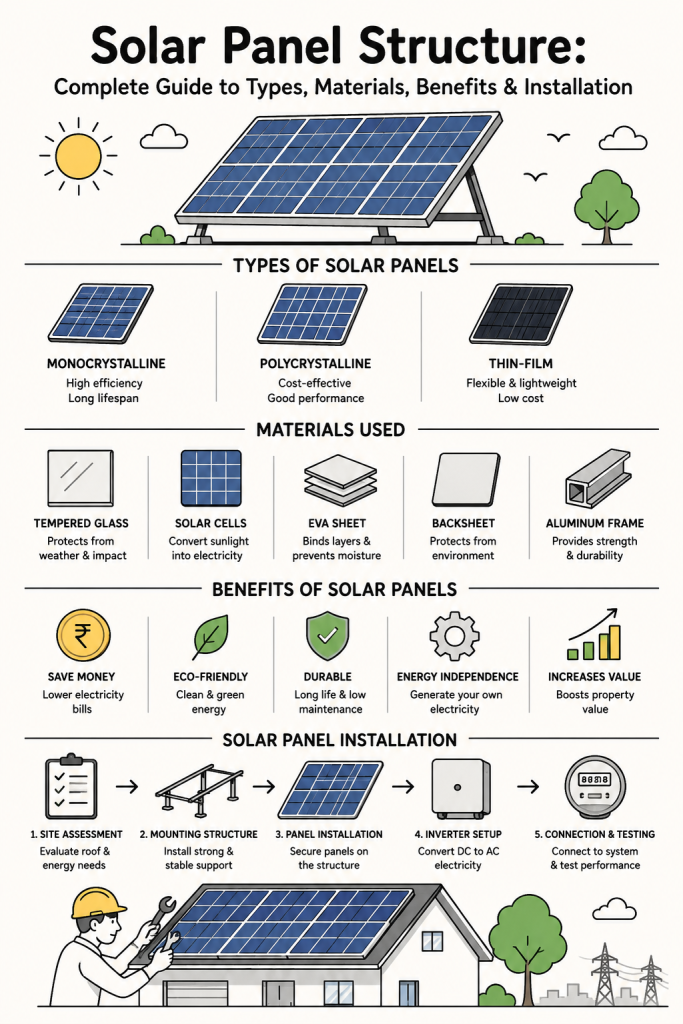
A solar panel structure is the foundation that safely holds solar panels in place. While most people focus on the solar panels themselves, the mounting structure is equally important. A high-quality solar panel structure ensures maximum sunlight exposure, improves energy generation, protects panels from harsh weather, and extends the overall life of your solar power system.
Whether you are installing a residential rooftop system, a commercial solar plant, or an industrial solar project, choosing the right solar panel mounting structure plays a major role in system performance.
Quick Answer
A solar panel structure is a specially designed framework that supports and secures solar panels at the correct angle and direction. It is usually made of galvanized iron (GI), aluminium, or mild steel to withstand wind, rain, and corrosion while maximizing solar energy production.
What is a Solar Panel Structure?
A solar panel structure is a mechanical support system that keeps solar panels firmly fixed. It helps panels maintain the ideal tilt angle for maximum sunlight throughout the year.
The right solar mounting structure offers:
- Strong support
- Weather resistance
- Easy maintenance
- Long operational life
- Better energy production
Without a durable structure, even premium solar panels cannot deliver their best performance.
Why is a Solar Panel Structure Important?
A quality solar panel support structure provides several advantages.
Better Solar Efficiency
Correct panel orientation increases sunlight exposure and improves electricity generation.
Long-Term Durability
A corrosion-resistant solar panel mounting system lasts for decades with minimal maintenance.
Wind Protection
Strong structures are designed to withstand high wind speeds and heavy rainfall.
Easy Maintenance
Proper spacing allows technicians to clean and inspect panels safely.
Enhanced Safety
A professionally installed solar panel installation structure prevents movement, vibration, and structural damage.
Types of Solar Panel Structures
Rooftop Solar Structure
The most common choice for homes and commercial buildings.
Suitable for:
- Residential rooftops
- Offices
- Schools
- Hospitals
- Commercial buildings
Advantages
- Saves roof space
- Easy installation
- Lower installation cost
- High efficiency
Ground Mounted Solar Structure
Ground-mounted systems are installed where rooftop space is limited.
Ideal for:
- Solar farms
- Industries
- Agricultural land
- Large commercial projects
Benefits
- Easier maintenance
- Better cooling
- Higher efficiency
- Flexible panel positioning
Elevated Solar Structure
These structures are installed above parking spaces or open areas.
Common applications include:
- Car parking
- Warehouses
- Commercial campuses
Pole Mounted Solar Structure
A pole supports multiple solar panels and is mainly used for:
- Street lights
- Farms
- Water pumps
- Remote areas
Materials Used in Solar Panel Structures
Galvanized Iron (GI)
The most popular choice for Indian weather conditions.
Benefits
- Rust resistant
- Strong
- Affordable
- Long lifespan
Aluminium Solar Structure
Preferred for lightweight rooftop installations.
Advantages
- Lightweight
- Corrosion resistant
- Easy installation
- Low maintenance
Mild Steel
Used mainly in industrial projects where extra strength is required.
Components of a Solar Panel Mounting Structure
A complete solar panel mounting system consists of:
- Base Frame
- Mounting Rails
- Clamps
- Fasteners
- Support Legs
- Anchor Bolts
- Brackets
- Panel Frames
Each component contributes to the overall stability of the system.
Factors to Consider Before Choosing a Solar Structure
Roof Type
Flat roofs and sloped roofs require different mounting systems.
Wind Load
Areas with high wind speeds need reinforced structures.
Panel Weight
Different solar panels have different weights.
The structure must support the total system load safely.
Weather Conditions
Choose corrosion-resistant materials for humid and coastal regions.
Future Expansion
Select a design that allows additional solar panels later.
Solar Panel Structure Installation Process
Professional installation generally follows these steps.
Site Inspection
Experts inspect the roof or ground area.
Structural Design
Engineers prepare the best mounting layout.
Material Selection
GI, aluminium, or steel structures are selected.
Installation
Frames are securely mounted.
Solar Panel Mounting
Panels are fixed using clamps and brackets.
Testing
Alignment, strength, and safety are checked before commissioning.
Solar Panel Structure Price in India
The cost depends on several factors.
These include:
- Material quality
- Roof type
- Panel capacity
- Wind load requirements
- Installation complexity
- Project size
Although premium structures cost more initially, they usually require less maintenance and offer a longer service life.
Common Problems with Poor Quality Solar Structures
Low-quality structures may lead to:
- Rust formation
- Loose panels
- Reduced efficiency
- Water leakage
- Roof damage
- Frequent repairs
- Lower system lifespan
Investing in a durable solar panel structure reduces long-term maintenance costs.
Maintenance Tips
Follow these simple maintenance practices.
- Inspect bolts every six months.
- Remove dust and debris.
- Check for rust.
- Tighten loose fasteners.
- Replace damaged brackets immediately.
- Schedule annual inspections.
Benefits of a High-Quality Solar Panel Structure
A premium solar panel mounting structure offers:
- Higher electricity generation
- Longer panel life
- Better safety
- Lower maintenance
- Strong wind resistance
- Better return on investment
- Improved system reliability
Why Choose Aashirwad Solutions?
At Aashirwad Solutions, we provide complete solar solutions designed for Indian weather conditions.
Our services include:
- Residential Solar Installation
- Commercial Solar Installation
- Industrial Solar Projects
- On-Grid Solar Systems
- Off-Grid Solar Systems
- Hybrid Solar Systems
- Solar Structure Design
- Professional Installation
- Annual Maintenance Support
We use premium-quality solar panel structures engineered for strength, durability, and maximum energy generation.
Frequently Asked Questions
What is a solar panel structure?
A solar panel structure is a supporting framework that securely holds solar panels in the correct position for maximum sunlight exposure while protecting them from weather conditions.
Which material is best for a solar panel structure?
Galvanized iron (GI) and aluminium are the most preferred materials because they are durable, corrosion-resistant, and require minimal maintenance.
How long does a solar panel structure last?
A high-quality solar panel structure can last between 25 and 35 years with proper maintenance.
Can I install solar panels without a mounting structure?
No. Solar panels require a strong mounting structure for safety, stability, and optimal energy production.
Which type of solar structure is best?
The best solar structure depends on your installation location. Rooftop structures are ideal for homes, while ground-mounted structures work better for large commercial and industrial projects.
Conclusion
A solar panel structure is one of the most important components of any solar energy system. It provides stability, improves efficiency, increases safety, and ensures your investment lasts for decades. Choosing the right solar panel mounting structure made from high-quality materials helps maximize energy production while minimizing maintenance costs.
Whether you need a rooftop solar structure, ground-mounted solar structure, or a custom-designed solar mounting system, selecting the right installation partner ensures long-term performance and peace of mind.